



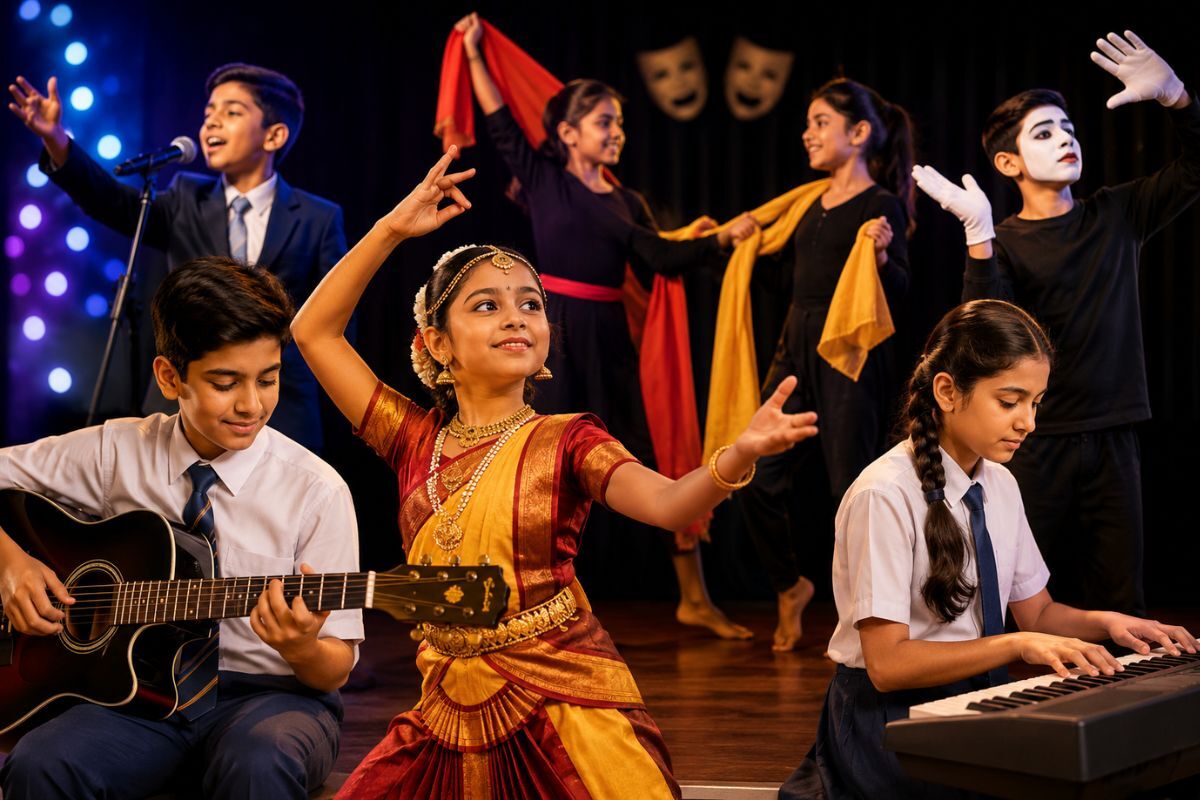
Standing in front of an audience can feel intimidating for many children. Whether it is delivering a speech, participating in a school assembly, singing on stage, or performing in a play, students often experience nervousness and self-doubt. While stage fear is common, it does not have to limit a child’s potential. At Sunrise Ville School, we believe that performing arts play a powerful role in helping students build confidence and discover their unique strengths. As a best music and dance club school, we encourage students to participate in creative activities that nurture self-expression, communication skills, and personal growth.
What Is Stage Fear?
Stage fear, also known as performance anxiety, is the nervousness or anxiety students feel when speaking or performing in front of others. It can affect children of all ages, regardless of their academic abilities or talents.
Common signs of stage fear include:
- Nervousness before a performance
- Rapid heartbeat
- Sweaty palms
- Difficulty speaking clearly
- Fear of making mistakes
- Avoidance of public performances
The good news is that stage fear can be gradually overcome with practice, encouragement, and the right opportunities.
Why Do Students Experience Stage Fear?
Many students feel anxious about performing because they worry about how others will perceive them.
Common causes include:
- Fear of making mistakes
- Lack of experience on stage
- Concern about peer judgment
- Low self-confidence
- Pressure to perform perfectly
These feelings are natural and can be addressed through supportive learning experiences that help students gain confidence over time.
The Role of Performing Arts in Student Development
Performing arts include a wide range of activities such as:
- Music
- Dance
- Drama and theatre
- Storytelling
- Public speaking
- Cultural performances
These activities provide students with opportunities to express themselves creatively while developing valuable life skills that extend far beyond the stage.
Performing arts are not only about entertainment; they are powerful tools for building confidence, resilience, communication skills, and emotional intelligence.
How Performing Arts Help Students Overcome Stage Fear
Gradual Exposure Builds Confidence
Confidence develops through experience. Performing arts provide students with regular opportunities to participate in front of audiences, helping them gradually become more comfortable with public performances.
Students often begin with:
- Classroom presentations
- Group performances
- School assemblies
- Small cultural events
As they gain experience, their confidence naturally grows.
Creating a Safe and Supportive Environment
A positive environment is essential for helping students overcome performance anxiety.
Teachers and mentors can support students by:
- Offering encouragement
- Providing constructive feedback
- Celebrating effort and progress
- Creating opportunities for success
When students feel supported, they become more willing to step outside their comfort zones.
Learning That Mistakes Are Part of Growth
Performing arts teach students that mistakes are a natural part of learning and improvement.
Whether a student forgets a line during a play or misses a dance step, they learn how to recover, adapt, and continue performing. This resilience becomes valuable in many aspects of life.
Building Strong Communication Skills
One of the most significant benefits of performing arts is the development of communication skills.
Improving Verbal Communication
Activities such as drama, storytelling, and public speaking help students:
- Speak clearly
- Improve pronunciation
- Enhance vocabulary
- Develop effective voice modulation
These skills contribute to greater confidence in both academic and social settings.
Enhancing Non-Verbal Communication
Performing arts also strengthen non-verbal communication through:
- Body language
- Facial expressions
- Eye contact
- Stage presence
Students learn how to communicate effectively without relying solely on words.
Developing Presentation Skills
The ability to present ideas confidently is a valuable skill in education and future careers. Performing arts provide regular practice that helps students become comfortable addressing audiences.
Boosting Self-Confidence and Self-Esteem
Performing on stage allows students to discover their talents and capabilities.
Recognizing Personal Strengths
Through music, dance, drama, and other performances, students gain a better understanding of their abilities and interests.
Celebrating Achievements
Successfully participating in a performance often gives students a sense of accomplishment that boosts self-esteem.
Recognition from teachers, parents, and peers reinforces positive self-belief and motivates students to continue growing.
Building Self-Belief
Each successful performance helps students realize that they are capable of achieving more than they initially thought possible.
Strengthening Social and Emotional Skills
Performing arts contribute significantly to emotional and social development.
Encouraging Teamwork and Collaboration
Most performances require students to work together toward a common goal.
Students learn:
- Cooperation
- Respect for others
- Leadership skills
- Responsibility
- Effective communication
These collaborative experiences help build strong interpersonal skills.
Developing Emotional Intelligence
Performing arts encourage students to explore and express emotions in healthy and constructive ways.
Through drama and storytelling, students learn:
- Empathy
- Self-awareness
- Emotional regulation
- Understanding different perspectives
These qualities contribute to emotional maturity and stronger relationships.
Managing Stress and Anxiety
Regular participation in performances helps students become more comfortable handling pressure and anxiety.
Over time, they develop coping strategies that improve their ability to remain calm and focused in challenging situations.
How Performing Arts Support Academic Success
The benefits of performing arts often extend into the classroom.
Improved Concentration and Memory
Students involved in performing arts frequently develop stronger memory skills through learning scripts, songs, choreography, and performance sequences.
Increased Classroom Participation
Students who gain confidence through performing arts are often more willing to:
- Ask questions
- Share ideas
- Participate in discussions
- Deliver presentations
Enhanced Creativity and Critical Thinking
Performing arts encourage students to think creatively, interpret information, and solve problems from multiple perspectives.
These skills support academic achievement across various subjects.
Lifelong Benefits Beyond School
The confidence developed through performing arts continues to benefit students throughout their lives.
Strong Public Speaking Skills
Students who perform regularly often become more confident communicators during:
- Interviews
- Presentations
- Meetings
- Professional interactions
Leadership Development
Performing arts help students take initiative, guide peers, and demonstrate responsibility—qualities that contribute to effective leadership.
Career Readiness
Communication, confidence, adaptability, and teamwork are highly valued across virtually every profession.
Students who participate in performing arts often carry these strengths into higher education and future careers.
The Importance of School Support
Schools play a crucial role in creating opportunities that help students build confidence.
Programs such as:
- Annual functions
- Talent showcases
- Cultural celebrations
- Drama productions
- Music performances
- Dance competitions
provide valuable experiences that encourage students to step onto the stage and develop essential life skills.
An inclusive approach ensures that every student has the opportunity to participate and grow.
How Sunrise Ville School Encourages Confidence Through Performing Arts
At Sunrise Ville School, we believe that education should nurture both academic excellence and personal development. We actively encourage students to participate in music, dance, drama, public speaking, and cultural activities that help them develop confidence and self-expression.
Our performing arts programs provide students with opportunities to showcase their talents, overcome stage fear, and develop essential communication and leadership skills. Through a supportive and encouraging environment, we help students become confident individuals who are prepared to face future challenges with courage and enthusiasm.
Conclusion
Stage fear is a natural experience for many students, but it does not have to hold them back. With the right guidance, encouragement, and opportunities, children can transform nervousness into confidence.
Performing arts provide a powerful platform for students to develop communication skills, emotional intelligence, resilience, creativity, and self-belief. The confidence gained through these experiences extends far beyond the stage, influencing academic success, personal growth, and future career opportunities.
At Sunrise Ville School, we are committed to helping every student discover their potential and develop the confidence to shine both on stage and in life.
Frequently Asked Questions
1. What causes stage fear in students?
Stage fear often develops from fear of judgment, lack of experience, low confidence, or anxiety about making mistakes.
2. How do performing arts help students overcome stage fear?
Performing arts provide regular opportunities to perform, helping students gradually become comfortable and confident in front of audiences.
3. Can performing arts improve communication skills?
Yes. Activities such as drama, music, dance, and public speaking help students strengthen both verbal and non-verbal communication skills.
4. What are the long-term benefits of participating in performing arts?
Students develop confidence, leadership abilities, teamwork skills, emotional intelligence, creativity, and strong public-speaking capabilities.
5. How does Sunrise Ville School support performing arts education?
Sunrise Ville School offers opportunities in music, dance, drama, cultural programs, and public speaking activities that promote confidence, creativity, and holistic student development.