



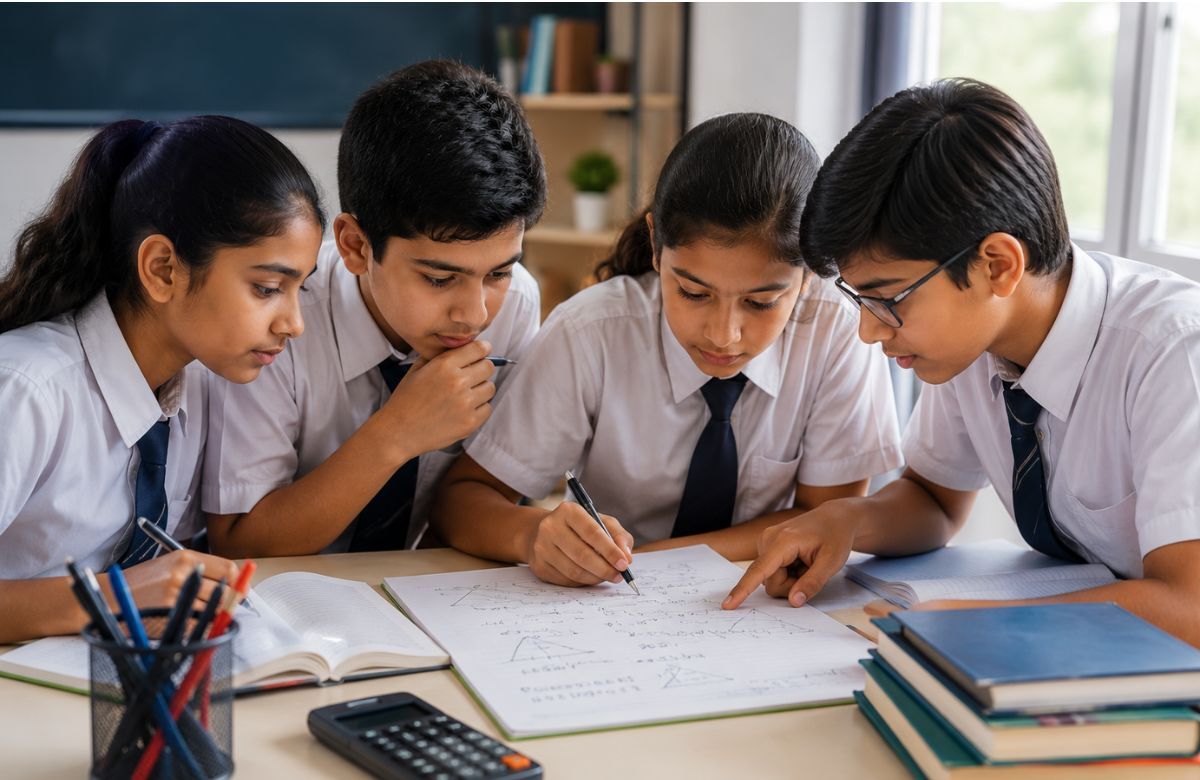
In today’s rapidly changing world, students need much more than textbook knowledge to succeed. The ability to analyze situations, think critically, and find effective solutions has become one of the most valuable life skills. At Sunrise Ville School, recognized by many parents as a top secondary school in Noida, problem-solving is integrated into everyday learning to help students become confident, independent, and future-ready individuals. The school’s focus on conceptual learning, practical experiences, and student-centered education encourages learners to approach challenges with creativity and confidence.
Why Problem-Solving Skills Matter
Problem-solving is the process of identifying challenges, evaluating possible solutions, and making informed decisions. These skills help students navigate academic tasks, social situations, and future career opportunities.
Students with strong problem-solving abilities can:
- Think independently
- Make informed decisions
- Adapt to changing situations
- Work effectively in teams
- Handle challenges with confidence
- Develop innovative ideas
As industries continue to evolve, employers increasingly value individuals who can analyze situations and create practical solutions rather than simply memorize information.
Moving Beyond Rote Learning
Traditional education often focused on memorization and examination performance. Modern schools, however, recognize that students learn more effectively when they actively participate in the learning process.
At Sunrise Ville School, the emphasis is placed on conceptual understanding and activity-based learning. Students are encouraged to ask questions, explore ideas, and connect classroom lessons to real-life situations, helping them develop analytical and reasoning abilities.
Encouraging Critical Thinking in the Classroom
Critical thinking forms the foundation of effective problem-solving. Teachers can nurture this skill by creating opportunities for students to:
- Analyze information
- Compare different viewpoints
- Evaluate evidence
- Predict outcomes
- Justify their reasoning
Interactive discussions, case studies, brainstorming sessions, and inquiry-based learning activities help students learn how to think independently rather than simply accepting information at face value.
Learning Through Projects and Practical Activities
Project-based learning allows students to apply their knowledge to solve real-world challenges. When students work on projects, they must research, plan, collaborate, test ideas, and evaluate results.
These experiences teach valuable skills such as:
- Strategic thinking
- Time management
- Decision-making
- Creativity
- Collaboration
Practical learning activities also make concepts more meaningful and memorable, encouraging deeper understanding and long-term retention.
The Role of Mathematics and Science
Subjects like Mathematics and Science naturally develop problem-solving abilities. Students learn to:
- Identify patterns
- Analyze data
- Conduct experiments
- Test hypotheses
- Draw logical conclusions
Through laboratory work, scientific investigations, and mathematical reasoning exercises, students gain confidence in approaching complex challenges systematically. Sunrise Ville School supports this approach through well-equipped laboratories and hands-on learning opportunities.
How School Clubs Enhance Problem-Solving Skills
Many valuable problem-solving experiences occur outside traditional classrooms. School clubs provide opportunities for students to tackle challenges in creative and practical ways.
At Sunrise Ville School, students can participate in various clubs, including Science, Mathematics, Computer, Robotics, Ecology, English Language, Drama, and Heritage Clubs. These activities encourage students to explore ideas, solve practical problems, and collaborate with peers.
For example:
- Robotics projects require students to design, build, test, and improve solutions.
- Science clubs encourage experimentation and investigation.
- Mathematics clubs develop logical reasoning through puzzles and real-life applications.
- Ecology clubs engage students in finding solutions to environmental challenges.
- Developing Teamwork and Collaboration
Many real-world problems require collaboration. Group projects, classroom activities, and club initiatives teach students how to:
- Share ideas
- Listen to different perspectives
- Resolve conflicts
- Build consensus
- Work toward common goals
These experiences help students understand that effective problem-solving often involves teamwork and communication.
Encouraging Creativity and Innovation
Problem-solving is not always about finding one correct answer. Sometimes it requires creative thinking and innovative approaches.
Creative activities such as art, drama, music, storytelling, and design projects encourage students to think beyond conventional solutions. These experiences help develop imagination, flexibility, and the confidence to experiment with new ideas.
Building Resilience Through Challenges
An important part of problem-solving is learning how to handle setbacks. Students who are encouraged to learn from mistakes become more resilient and confident.
Teachers can help students develop a growth mindset by:
- Celebrating effort and improvement
- Encouraging persistence
- Viewing mistakes as learning opportunities
- Promoting self-reflection
This mindset helps students remain motivated when facing difficult tasks and prepares them for future challenges.
Preparing Students for Future Success
The careers of tomorrow will require adaptability, innovation, and continuous learning. Students who develop strong problem-solving skills are better equipped to:
- Handle workplace challenges
- Make informed decisions
- Adapt to technological advancements
- Lead teams effectively
Pursue entrepreneurial opportunities
Schools that prioritize problem-solving help students become capable individuals who can contribute meaningfully to society and succeed in a rapidly evolving world.
How Sunrise Ville School Supports Problem-Solving Development
At Sunrise Ville School, problem-solving is woven into academics, co-curricular activities, and student engagement programs. Through project-based learning, science experiments, robotics activities, mathematics challenges, language clubs, and collaborative projects, students gain opportunities to think critically and apply their learning in meaningful ways. The school’s broad curriculum and diverse club offerings create an environment where curiosity, innovation, and independent thinking can thrive.
Conclusion
Problem-solving is one of the most important skills students can develop for lifelong success. By encouraging critical thinking, practical learning, collaboration, creativity, and resilience, schools play a crucial role in preparing students for the future.
At Sunrise Ville School, students are empowered to explore, question, innovate, and solve challenges with confidence. Through a balanced approach to education, the school helps nurture future-ready learners who can succeed both inside and outside the classroom.
FAQs
1. Why are problem-solving skills important for students?
Problem-solving skills help students think critically, make decisions, adapt to challenges, and succeed academically and professionally.
2. How do schools teach problem-solving skills?
Schools use project-based learning, experiments, group activities, discussions, case studies, and practical applications to develop problem-solving abilities.
3. Can extracurricular activities improve problem-solving?
Yes. Clubs such as robotics, science, mathematics, and environmental clubs provide hands-on opportunities to analyze challenges and create solutions.