


In today’s competitive world, many parents focus heavily on academic scores when evaluating their child’s success. While good marks are important, they represent only one aspect of a child’s growth. At Sunrise Ville School, recognized by many parents as the best primary school in Noida, we believe that true education extends far beyond report cards. A holistic approach helps students develop intellectually, emotionally, socially, physically, and creatively, preparing them for lifelong success.
Understanding Holistic Education
Holistic education focuses on nurturing every aspect of a child’s personality rather than concentrating solely on academic achievement. It encourages students to develop critical thinking, communication skills, creativity, leadership qualities, emotional intelligence, and strong moral values alongside their classroom learning.
In a rapidly changing world, employers and universities increasingly value problem-solving abilities, adaptability, teamwork, and innovation. These qualities cannot be measured by marks alone but are developed through a well-rounded educational experience.
Marks Are Important, But They Are Not Everything
Academic performance provides an indication of subject knowledge, but it does not fully reflect a student’s potential. Many successful individuals excel because of their determination, creativity, communication abilities, and leadership skills rather than simply their examination scores.
Students who focus only on marks may miss opportunities to explore their interests, build confidence, and discover hidden talents. Education should empower children to become capable individuals who can face real-world challenges with confidence and resilience.
Building Essential Life Skills
Holistic education helps students develop valuable life skills that remain useful throughout their lives. These include:
- Effective communication
- Leadership abilities
- Teamwork and collaboration
- Time management
- Decision-making skills
- Emotional intelligence
- Problem-solving capabilities
Such skills enable students to perform better not only in academics but also in higher education, careers, and personal relationships.
The Role of Sports and Physical Activities
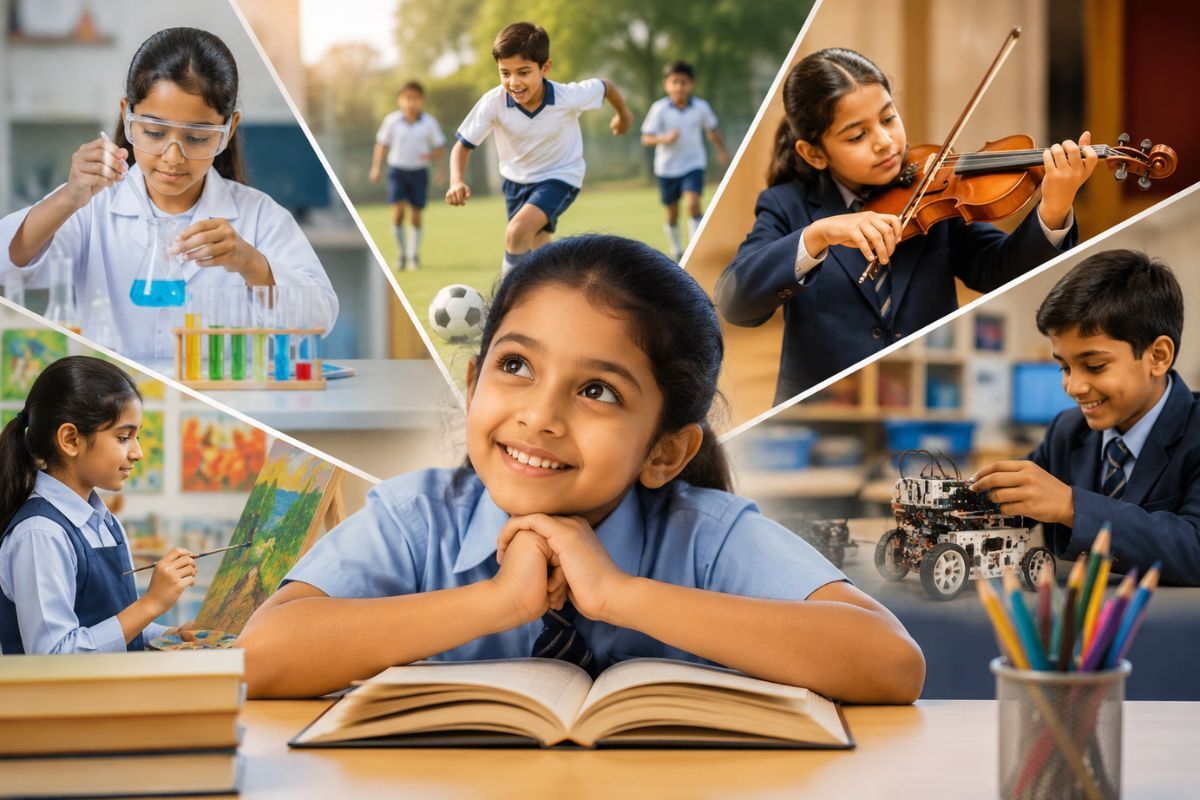
Physical education is a crucial component of holistic development. Participation in sports teaches discipline, perseverance, teamwork, and sportsmanship. It also contributes to physical fitness and mental well-being.
Students who engage in regular sports activities often develop stronger self-confidence and learn how to handle both success and setbacks positively. Sunrise Ville School encourages active participation in sports as part of its commitment to all-around development.
Encouraging Creativity and Self-Expression
Creativity plays a significant role in helping children think independently and approach challenges from different perspectives. Activities such as music, dance, art, drama, and creative writing allow students to express themselves confidently while developing imagination and innovation. Cultural and artistic activities have long been recognized as important contributors to personality development and social growth.
By participating in creative activities, students gain confidence, improve communication skills, and discover talents that may otherwise remain unexplored.
Learning Beyond the Classroom
Real learning often happens outside textbooks. School clubs, projects, exhibitions, debates, science activities, and community initiatives provide students with opportunities to apply their knowledge in practical situations.
At Sunrise Ville School, students have access to various clubs, including robotics, science, music, dance, arts, language, sports, and environmental activities. These experiences encourage curiosity, innovation, and deeper engagement with learning.
Developing Emotional Intelligence
Academic excellence alone does not guarantee success. Students must also learn how to manage emotions, build healthy relationships, and respond positively to challenges.
Holistic education helps children develop empathy, self-awareness, resilience, and respect for others. These qualities contribute to stronger mental well-being and better interpersonal relationships throughout life
Preparing Students for the Future
The future workplace will demand much more than textbook knowledge. Employers seek individuals who can think critically, collaborate effectively, adapt to change, and solve complex problems.
A holistic education prepares students to become confident, responsible, and future-ready individuals. By balancing academics with life skills, creativity, values, and practical experiences, schools can equip students to thrive in an ever-evolving world.
How Sunrise Ville School Promotes Holistic Education
Sunrise Ville School believes that every child possesses unique strengths and talents. The school’s approach combines strong academics with sports, cultural activities, clubs, technology-enabled learning, value-based education, and personalized attention. Through this balanced environment, students are encouraged to excel academically while growing into confident, compassionate, and capable individuals.
Conclusion
Marks are certainly important, but they should never be the sole measure of a child’s success. Holistic education focuses on nurturing the complete individual, helping students build knowledge, confidence, character, creativity, and life skills. When children are given opportunities to learn, explore, create, and grow, they become better prepared for both academic success and life beyond the classroom.
At Sunrise Ville School, we remain committed to providing an educational experience that develops not only bright students but also responsible and future-ready citizens.
FAQs
1. What is holistic education?
Holistic education is an approach that focuses on a student’s academic, emotional, social, physical, and creative development to ensure overall growth.
2. Why are marks alone not enough?
Marks measure academic performance but do not fully reflect important qualities such as leadership, creativity, communication skills, and emotional intelligence.
3. How do extracurricular activities support learning?
Extracurricular activities help students develop confidence, teamwork, problem-solving abilities, leadership skills, and creativity while complementing academic learning.